
How do different types of solar panels vary in their embodied carbon emissions?
Understanding the embodied carbon emissions of solar panels is crucial for evaluating their overall environmental impact. Embodied carbon refers to the total greenhouse gas emissions produced during the manufacturing, transportation, installation, and disposal of solar panels. Different types of solar panels—such as monocrystalline, polycrystalline, and thin-film—exhibit varying levels of embodied carbon due to differences in materials, production processes, and efficiency.
Monocrystalline solar panels typically have a higher embodied carbon footprint compared to other types because of their energy-intensive manufacturing process. However, their superior efficiency and longer lifespan can offset this initial impact over time. Polycrystalline panels, while slightly less efficient, generally have a lower embodied carbon due to simpler production methods. Thin-film panels, on the other hand, offer the lowest embodied carbon emissions, thanks to their lightweight design and less energy-intensive manufacturing, although they usually provide lower efficiency.
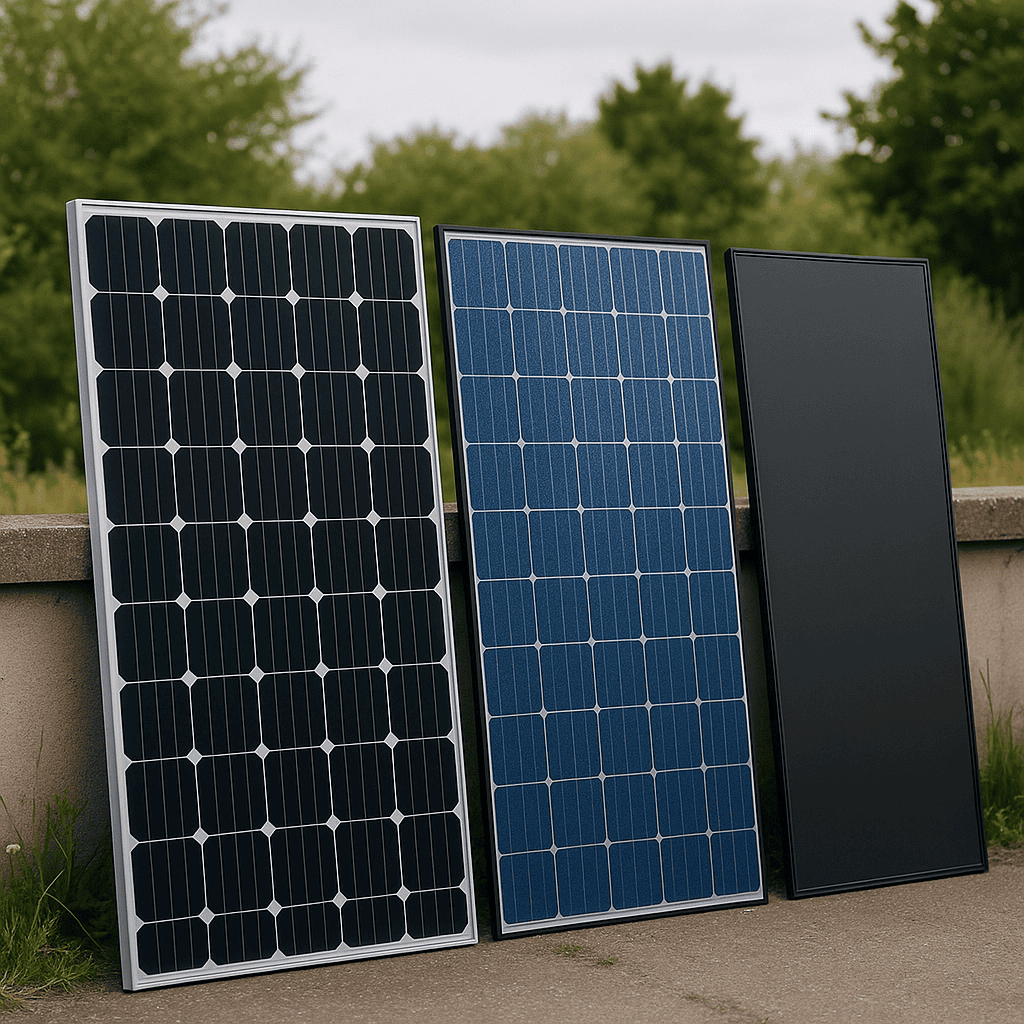
Monocrystalline solar panels are known for their efficiency and longevity, but their production process involves energy-intensive techniques such as the Czochralski method. This results in higher embodied carbon emissions. Despite this, their extended lifespan and high energy output can lead to a reduced carbon footprint over the long term, making them a viable option for those prioritising efficiency and durability.
Polycrystalline solar panels, while less efficient, are made using a simpler and less energy-consuming process. This results in a lower embodied carbon footprint compared to monocrystalline panels. They are a popular choice for residential and commercial installations where cost and environmental impact are key considerations. Their balance of efficiency and lower embodied emissions makes them an attractive option for many.
Thin-film solar panels present the lowest embodied carbon emissions due to their lightweight structure and less resource-intensive production. They are particularly suited for applications where weight is a concern, such as on rooftops with weight restrictions. While they have lower efficiency rates, their reduced environmental impact during production can be beneficial in scenarios where reducing embodied carbon is a priority.