
What are the different types of metering and export meters used in solar technology?
Solar technology has revolutionised the way we generate and consume energy, with metering playing a pivotal role in this transformation. Understanding the different types of metering and export meters is essential for anyone looking to optimise their solar energy systems. These meters not only help in accurately measuring energy production and consumption but also facilitate the process of exporting surplus energy back to the grid.
In the world of solar technology, metering solutions are designed to ensure that solar energy systems operate efficiently and effectively. By selecting the right type of meter, users can maximise their energy savings and contribute to a sustainable future. This page will delve into the various types of metering and export meters available, providing you with the knowledge needed to make informed decisions about your solar energy setup.
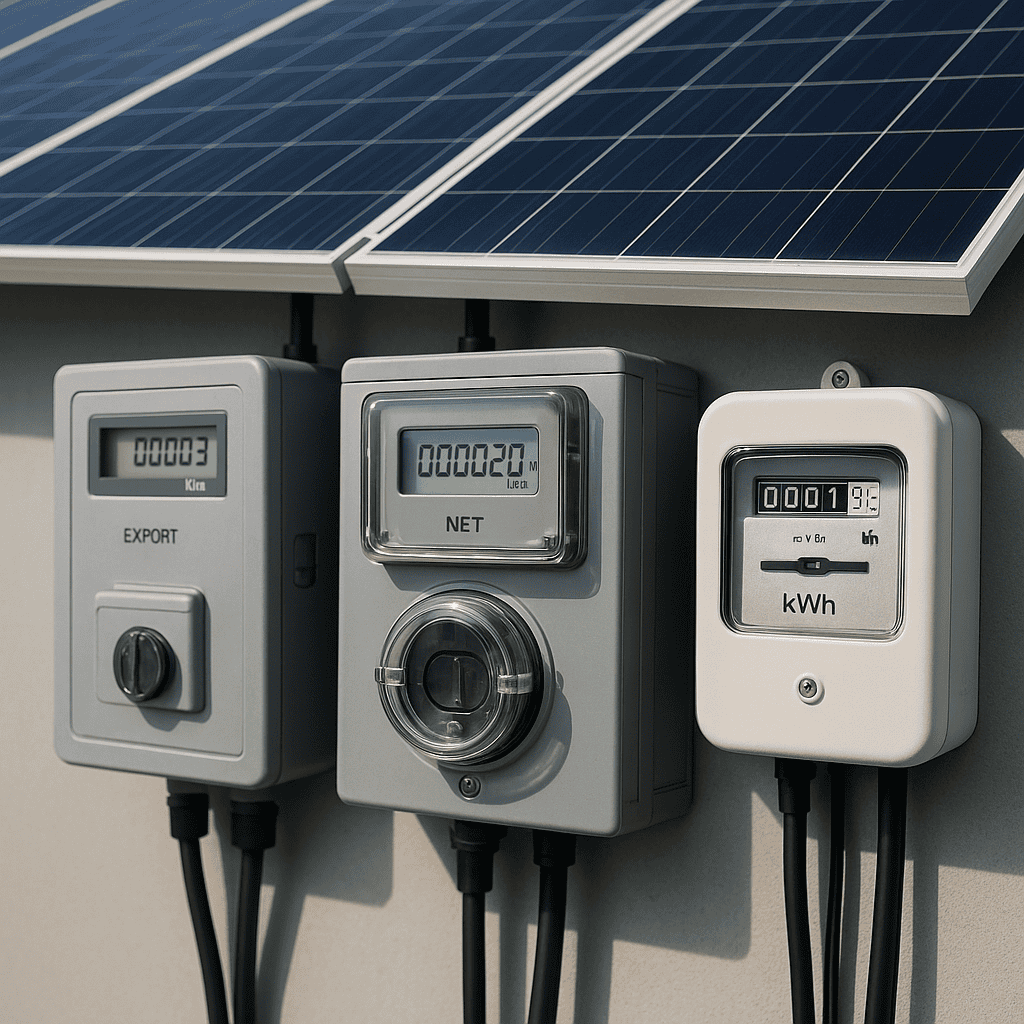
One common type of metering used in solar technology is the net meter. Net metering allows users to receive credits for any surplus energy they export to the grid. This system is particularly beneficial for residential solar users, as it provides a straightforward way to offset energy costs. The meter tracks both the electricity consumed from the grid and the excess energy sent back, ensuring that users are billed only for their net energy consumption.
Another important type is the gross meter, which measures all the energy generated by a solar system. Unlike net metering, gross metering records the total output of a solar installation, regardless of whether it is used on-site or exported. This type of metering is often used in commercial settings where energy generation and consumption are monitored separately, allowing for precise energy management and billing.
Export meters, on the other hand, are specifically designed to measure the amount of electricity sent back to the grid from a solar system. These meters are crucial for determining the financial return from exporting surplus solar energy. By accurately recording exported energy, export meters ensure that users receive appropriate compensation, thus enhancing the economic viability of solar installations. Together, these metering solutions play a vital role in the efficient operation and financial success of solar energy systems.